Loading
 We Keep It Running.We Keep It Running.
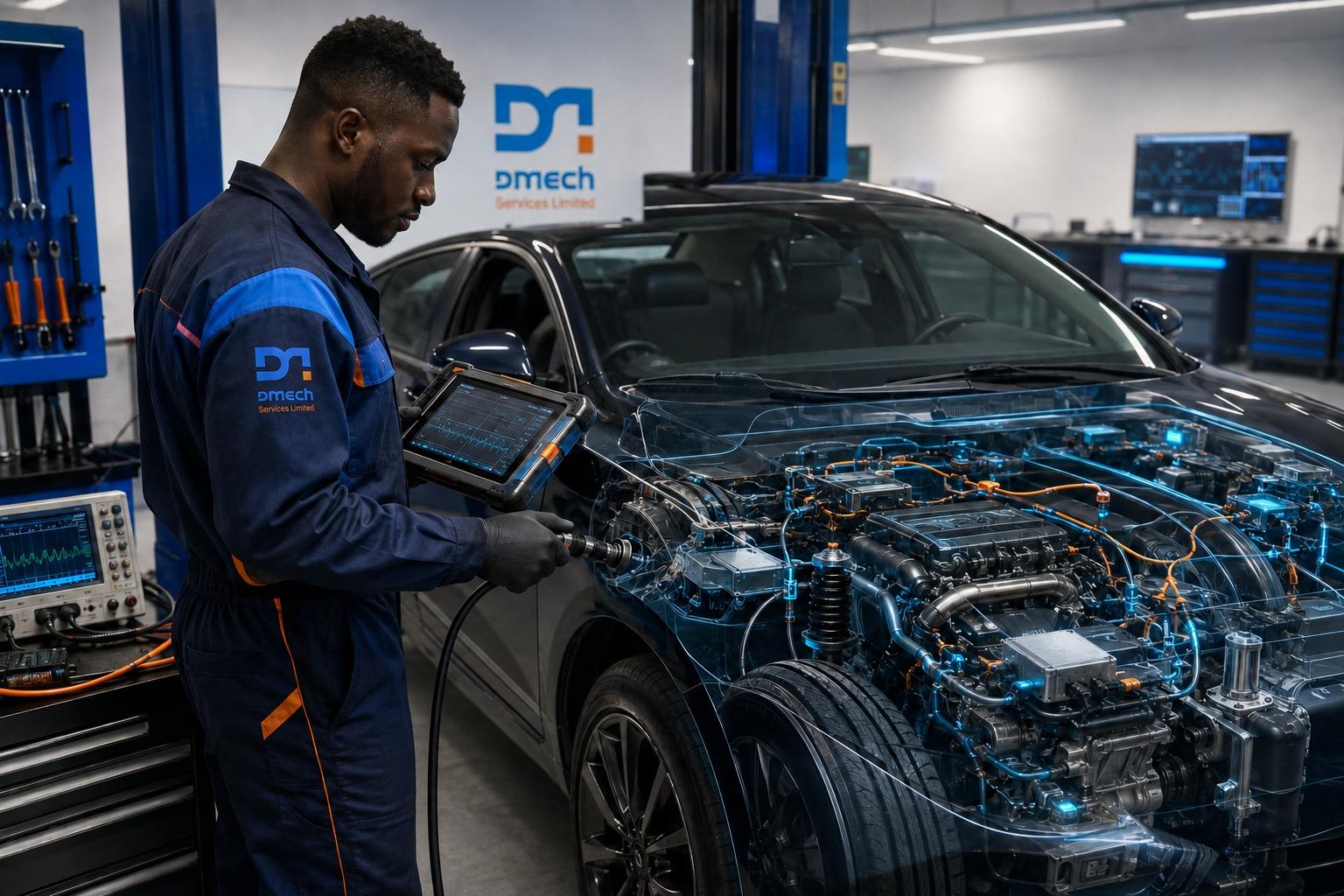
High-voltage battery systems, thermal management and inverter/motor diagnostics — capability we built by extending ten years of mechanical and auto-electrical diagnostic discipline into electric vehicles.
Every vehicle — petrol or electric — is a mix of mechanical, electrical and thermal systems. What an EV adds is a high-voltage battery, power electronics and the safety procedures that come with them. That’s where DMECH has invested in tools and training, on top of the diagnostic approach we’ve used since 2016.
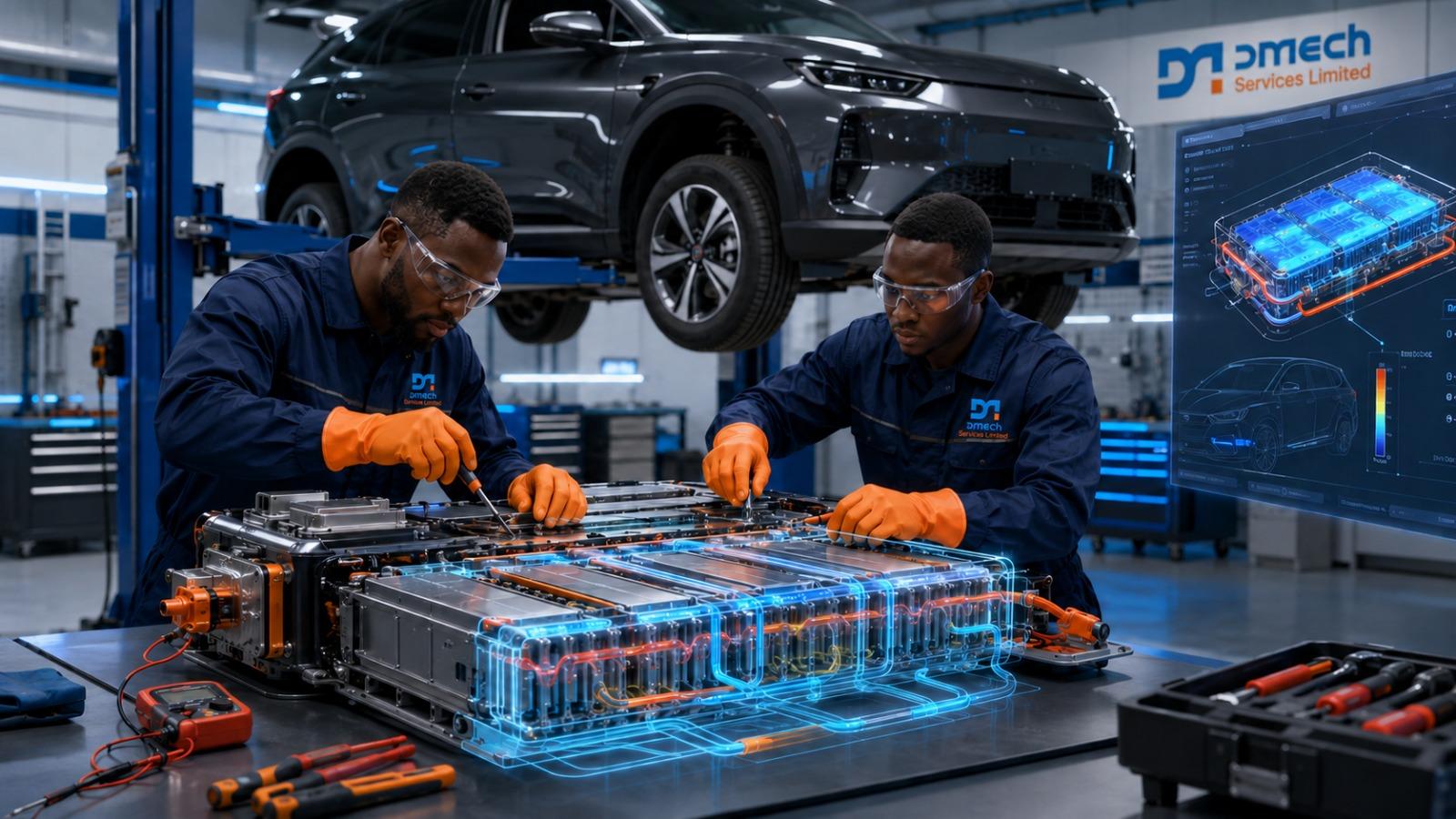
Diagnosis and service of the BMS itself — the layer that decides how a pack charges, discharges and protects itself.
EV packs live or die by temperature control. We service and diagnose the cooling systems that keep a pack safe and performing.
The electronics that turn stored energy into motion — diagnosed with the same rigour we’ve applied to combustion drivetrains since 2016.
Before anyone recommends replacing a whole pack, we look for module- and cell-level causes where the pack design allows it.
The battery decides most of a used EV’s range and value. A DMECH assessment gives you evidence to decide on — with the method, conditions and limitations written down, so you know exactly what was and wasn’t measured. It is an assessment report, not an accredited certification.
An inspection or feasibility discussion can be arranged now.
An inspection or feasibility discussion can be arranged now.
Status reviewed 10 Oct 2026.
Individual buyers, importers sourcing EVs from abroad, lenders financing them and insurers pricing coverage on them.
Scanner reading or controlled capacity test — the report says which, plus the conditions, fault codes, date and limitations.
Both EVs and combustion vehicles combine mechanical, electrical and thermal systems — brakes, suspension and steering still need a mechanic. What EVs add is high-voltage work: battery, inverter and motor diagnostics need specific tools, training and safety procedures before anyone touches them.
There are different levels. A scanner reading reports the battery-management system’s own state-of-health estimate. A controlled usable-capacity test measures energy delivered under stated conditions and takes longer. Neither is an accredited certification. Every DMECH report states which method was used, the conditions, fault codes found, the date and the limitations.
Anyone buying, financing or insuring a used EV who wants evidence of battery condition before committing — individual buyers, importers, lenders and insurers.
No — our high-voltage diagnostics and battery health assessments are open to any EV, whether or not you bought it from us.
Book a high-voltage diagnostic or an independent battery health check before you commit.