Loading
 We Keep It Running.We Keep It Running.
Tap a card to see the honest answer — some worries are myths, some are worth planning for.
Not every ‘electric’ car plugs in, and not every one leaves petrol behind. Start with how each type works.
A battery electric vehicle has no petrol or diesel propulsion engine. It needs an external charging plan suited to your parking, route and available electrical supply.
| Type | Plugs in? | Uses fuel? | Electric-only driving | Best for |
|---|---|---|---|---|
| BEV — battery electric | Yes | No | Always | Predictable routes with reliable charging |
| HEV — hybrid | No | Yes | Short, low-speed bursts | No charging access; mixed city driving |
| PHEV — plug-in hybrid | Yes | Yes | Short daily trips (often 40–100 km) | Short commutes plus occasional long trips |
| EREV — range extender | Yes | Yes (engine only charges) | Most trips; engine tops up the battery | Long range where charging is scarce |
No pistons, gearbox oil, spark plugs or exhaust — instead, a battery, power electronics and a motor working as one system.
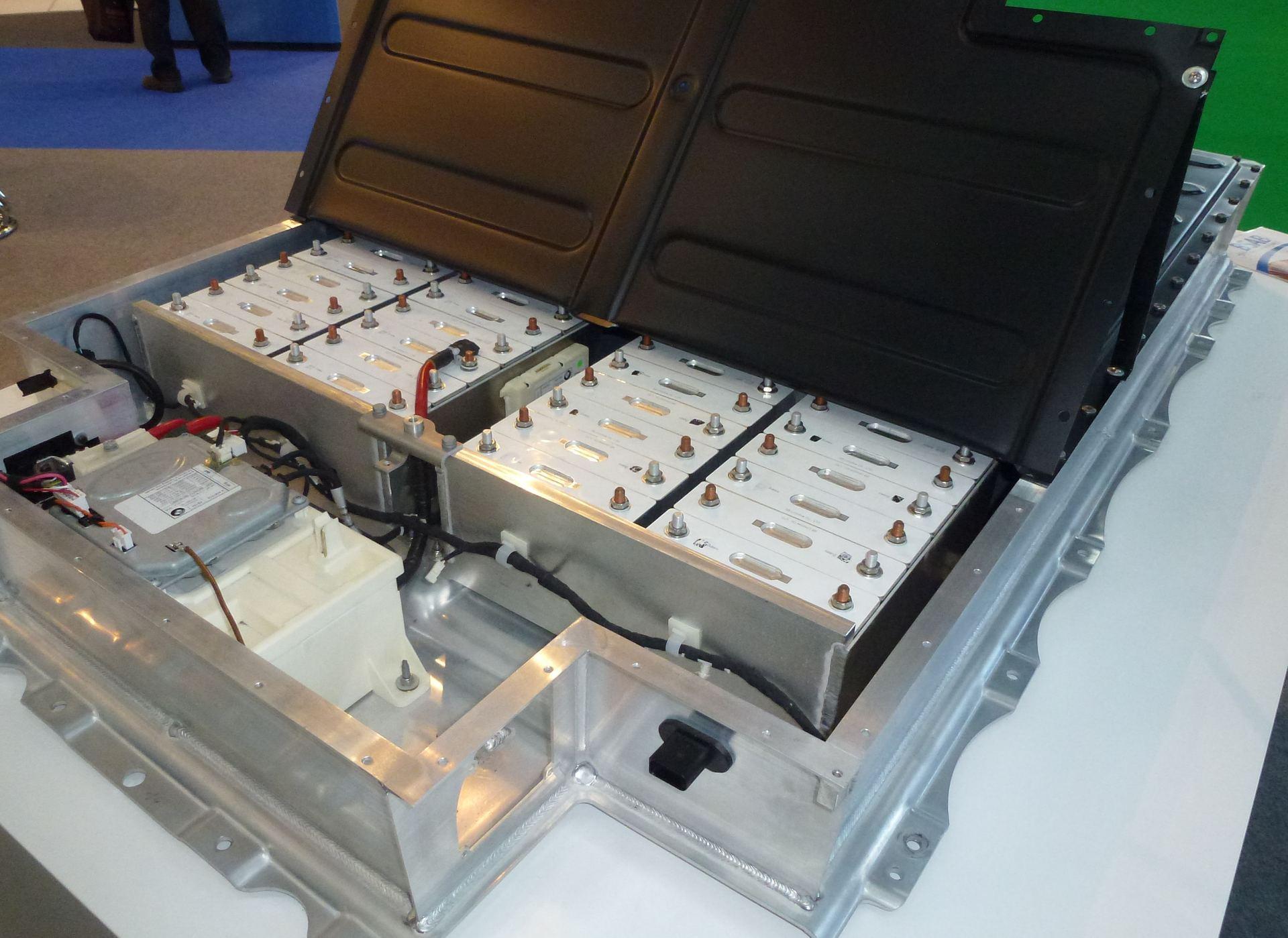
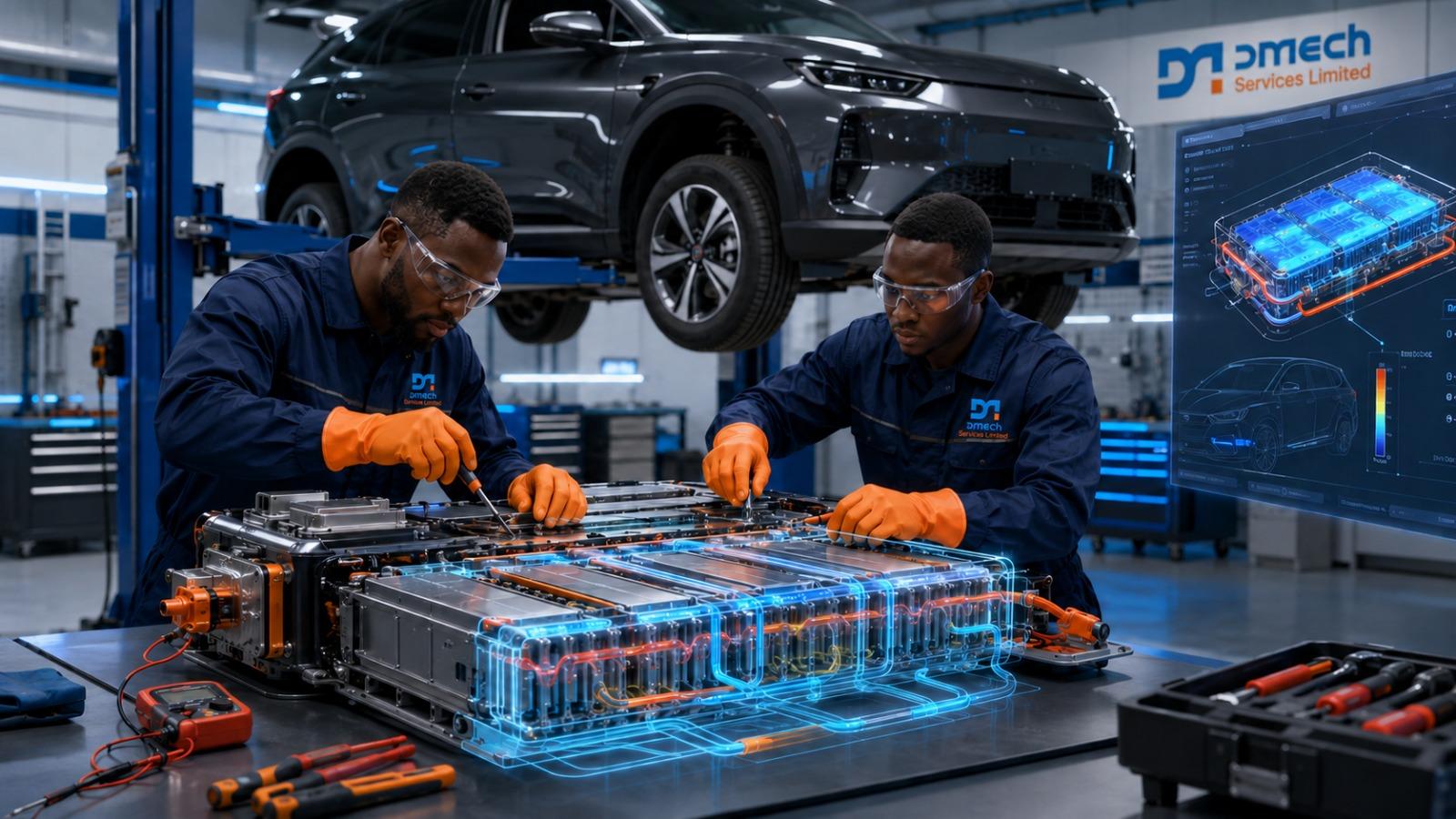
Hundreds of cells in modules — the car’s ‘fuel tank’ and its most valuable part.
Monitors every cell’s voltage and temperature, balances them and protects the pack.
Turns the battery’s DC into the AC that drives the motor — and back again when braking.
Instant torque, almost silent, with a handful of moving parts instead of hundreds.
Converts AC from your wall or wallbox into DC for the battery; its rating limits AC charging speed.
Liquid cooling (or air) keeps the pack in its comfort zone — crucial in Nigerian heat.
Slowing down spins the motor as a generator, putting energy back into the battery.
Still there — it powers lights, locks and screens, and wakes the high-voltage system.
Range added per hour of charging, for a typical car using about 18 kWh per 100 km.
Fine for short daily trips; get the socket and wiring checked first.
The sweet spot — a full charge overnight for most cars.
Offices and depots — if the car’s onboard charger accepts it.
For trips and fleets. Slows above ~80% to protect the battery.
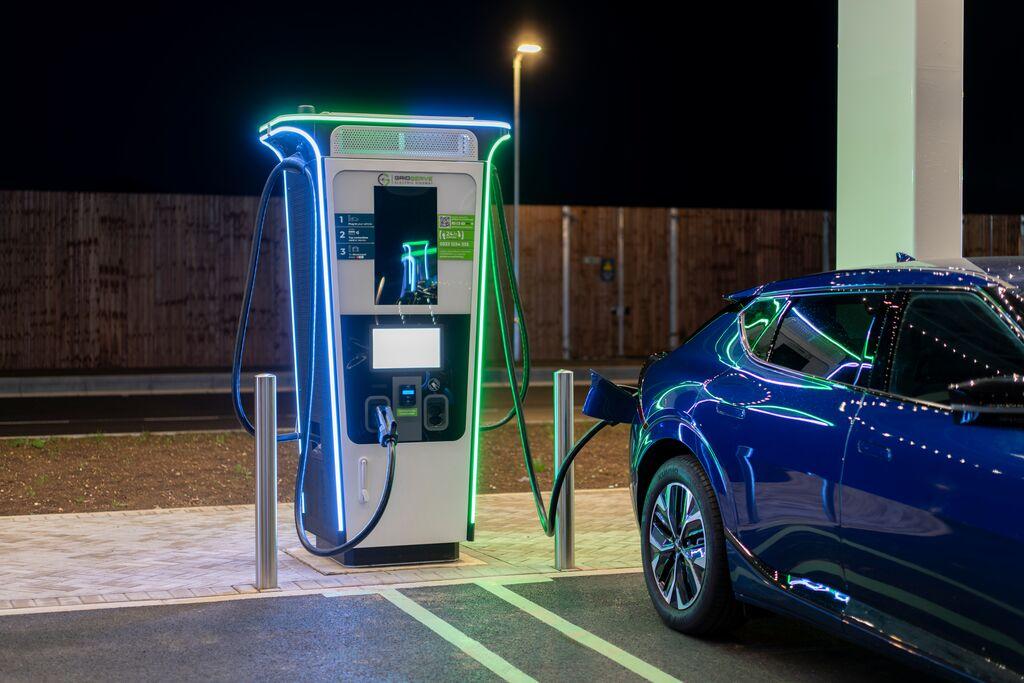
The cheapest way to charge when supply is steady. Charge overnight and know your tariff band.
Daytime solar can charge at home or work. Size the inverter and panels for the car’s load — we’ll help you check.
Ideal for fleets and staff cars: a few AC chargers at the office or depot cover most daily driving.
Works in a pinch, but generator electricity can cost more per km than petrol. Run the numbers first.
Pick a distance, your vehicle type and a charger — see the time instantly.
The everyday choice: a full overnight charge for most cars. Estimates assume ~90% charging efficiency; real times depend on the vehicle, battery temperature and charge level.
Pick a driving pattern, then edit every assumption to match your route, fuel price and tariff.
Defaults are editable examples, not current Nigerian tariffs or measured DMECH vehicle results. Generator charging costs should use your actual delivered electricity cost.
Energy only. Vehicle cost, finance, charger installation, maintenance, insurance, depreciation and battery replacement are excluded. AC, load, traffic and battery condition affect consumption.
The battery decides an EV’s range and most of its value. Our independent check measures what’s really left — not just whether it powers on.
No. Compare the test cycle stated for the exact model, then allow for your speed, traffic, air-conditioning, load, route and battery condition. CLTC and WLTP figures are not directly interchangeable — CLTC figures usually look higher.
Often yes, slowly — around 10–12 km of range per hour. The socket, wiring and earthing must be checked first because the car draws a high current for hours. A dedicated wallbox is safer and much faster.
Confirm the exact vehicle’s AC and DC inlet, communication standard, charger compatibility and approved equipment. Connector shape alone does not prove compatibility — many China-market cars use the GB/T standard.
Ask for the test method, conditions, fault codes, limitations and date. A scanner ‘state of health’ estimate is different from a controlled usable-capacity measurement. DMECH’s EV & battery health page explains what each type of check covers.
Not automatically. Customs guidelines reported in 2026 list hybrids among exclusions from EV incentives. Confirm the exact category for your model — see our policy desk.
Packs usually degrade gradually rather than failing suddenly. Weak modules can sometimes be replaced, and retired packs can be reused for energy storage before recycling.
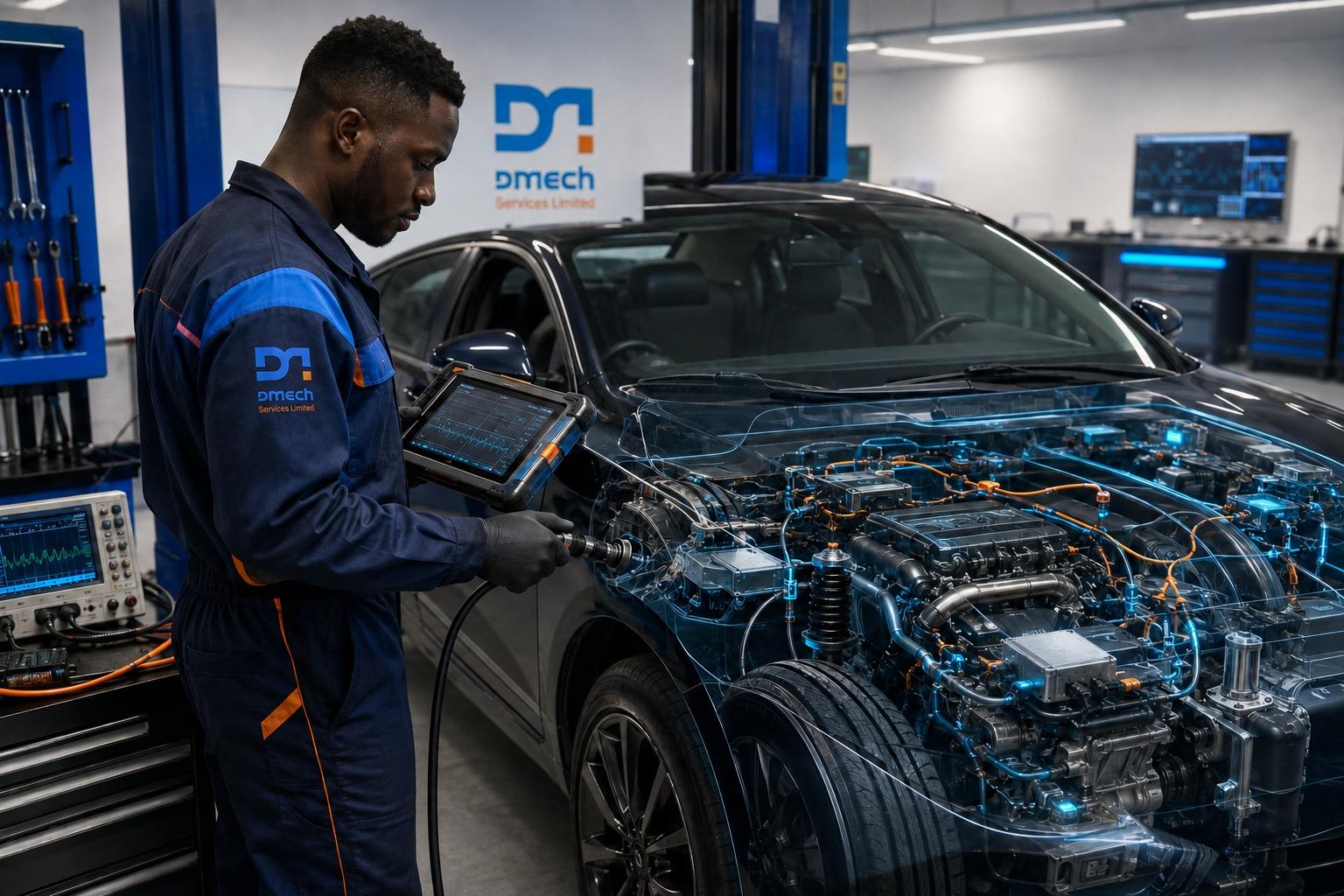
DMECH services EVs whether or not you bought from us: diagnostics, battery-management and thermal systems, charging checks and battery-health assessment.
Let’s discuss your route, charging access, battery assessment and support needs.